Scale Inhibitor Program Management and Residual Monitoring
Scale inhibitor programs are judged on what does not happen. Prodesy makes the evidence visible: inhibitor rate vs target, residual concentration, water chemistry and suspended solids per well, on one timeline.
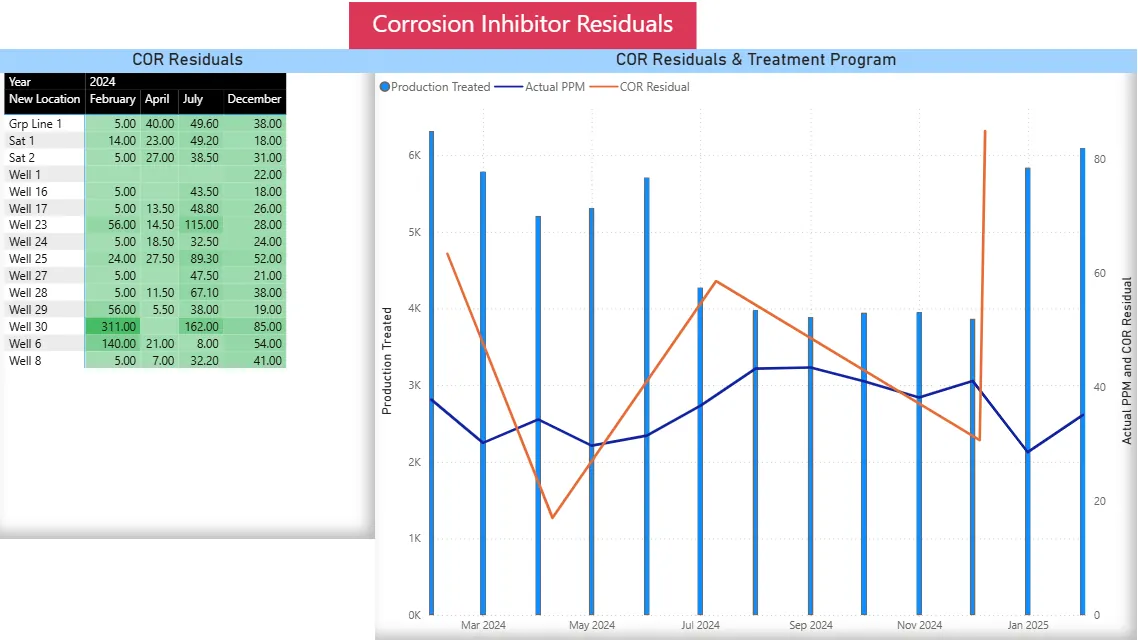
Proving a scale program works
Scale inhibitor oil and gas programs typically run continuous injection at a rate set once and rarely revisited. The evidence that the rate is right, residual above the minimum inhibitor concentration and no rise in solids or iron, lives in lab reports nobody trends. Prodesy trends them, against the rate, per well.
What Prodesy tracks
- Continuous inhibitor rate vs target per injection point
- Squeeze treatments with volume, date and expected life
- Residual inhibitor concentration per well from the lab workflow
- Water analysis: iron, manganese, suspended solids, hardness, pH
- Water production per point from production data
- Alerts when residual falls below MIC or solids rise
Right-sizing the rate
With residuals trended against rate, wells running well above MIC can be turned down and wells approaching it turned up, which is where both cost reduction and integrity protection come from. Producers use the view with vendor benchmarking; vendors use it to show that the program is doing its job.
Frequently asked questions
Does Prodesy track squeeze life?
Yes. Squeeze treatments are logged with expected return-to-MIC dates and residual sampling is scheduled against them.
Can it alert on residuals?
Yes. Per-well MIC thresholds trigger alerts and follow-up sampling.
Does it work for water injection and disposal systems?
Yes. Injection points on water systems are configured like any other treatment point.
See your chemical program in Prodesy
A 30-minute online demo using your injection points, vendors and lab data. You leave knowing where variance and cost are hiding.
Book a demo